W is for Women of a Certain Age
I’ve noticed for years now all the successful “Mommy” blogs—full of good advice and cute stories about things the kids did, often landing sponsors and lots of free samples—cereal, diapers, formula, Extra-Strength Advil. What I want to see—or to create—is a blog for “Retired Mommies”—Baby Boomers who have paid our dues, successfully made it to or through menopause, who have gone gray gracefully or formed a cozy relationship with Lady Clairol.
After all, we’re a powerful demographic. We shop for clothes, often keeping a range of three of four sizes in our closets to account for fluctuations. We probably buy a hefty percentage of wine and chocolate.
We take vacations somewhere other than Disney World. We like the beach—but not the crowded ones. We can plant our beach chairs and umbrellas and spend the week with a stack of magazines and a couple of good books. We like the mountains too. We like to stay in hotel rooms and to eat at good restaurants. We’ve done the fast-food things—especially if we’ve raised kids. (Some of us still have petrified French fries under the seats of the car.) We can cook, too, if we want to. We’ve learned that it’s okay to vary from the original recipe. In fact, if we found the written recipe to some of our favorite meals, we wouldn’t recognize them. We’ve changed them that much—using what we have so we don’t have to drive to the grocery story one more time.
We listen to all kinds of music, but we may not keep up with top forty—at least not this millennium’s top forty. We can “name that tune” in five seconds if you play the opening chords to something from the 70s. We go to concerts, but not the ones where little middle school girls squeal. We remember the Beatles. We know who deserves a good scream. We are more likely to buy a CD than to download one because we know that cloud will go away when the next thing comes along. We still have our vinyl records—and the turntable to play them on. We count ourselves as successful parents if our children share at least some of our musical tastes. (Mine do. Hallelujah.)
We love our grandchildren. We really love our grandchildren. But we’ve made several stipulations that must be followed upon our untimely demise: Do not put nicknames in my obituary. I love it when the kiddos call me “Nana,” but not the Charlotte Observer. I also have insisted they should not use a picture if: (a. it shows me with oxygen tubes coming out of my nostrils; (b. it has “First in Flight” superimposed over my face—surely there’s a better picture than my driver’s license shot; (c. no sideways hats—not likely—or shades; I also insist on no picture from the 80s. Nobody looked good in 80s. And no matter how gracefully I shuffle off this mortal coil, I don’t want anybody to have to read about my courageous fight with whatever takes me out.
I respect anyone else’s choice, but if they have to send me out laughing, let it be with me, not at me.
I think most women my age could give a lot of advice on relationships—but we know better. With nearly thirty-eight years of marriage to one good man, I still hesitate to offer anyone generic platitudes. I know it’s sometimes hard work, and it’s sometimes heaven, and it’s worth hanging in there, especially if you pick the right man. But I’d not dare to presume I know some magic formula or Oprahesque top ten tips.
Most of us would love to have our twenty-year-old bodies back, but we’d like to keep our current brains, than you very much, and we wouldn’t give up the memories we’ve accumulated in the meantime. I think I’d even keep the smile lines.
V is for Volunteer
If you’re tired of hearing me regale my adventures at Merlefest this past week, check out someone else’s blog. I promise, this is the last for now.
I’ve been attending the Merle Watson Memorial Festival (Merlefest) in Wilkesboro, NC, for several years now–along with several thousand other music fans. Unlike so many festivals, this is not nasty liquored-up mudfest; contrary to some misgivings, it’s not simply “just another bluegrass festival” either. In fact, it’s one of the best-run, most eclectic festivals anywhere.
For the first time this year, I attended as a volunteer, working three days at the front of the main stage at the photo platform, trying to make sure only photographers with the right credentials (silver arm band, the right press photograph bade, and a green armband that looked like a drink coozie) climbed up onto the platform closest to the stage. I got to wear a lovely chartreuse vest with a name tag, under which I added more and more layers of clothes as the day grew cooler–then colder.
Of course, when I was off duty, I could roam to any stage on the campus, so I saw lots of different acts at the Hillside Stage, the Creekside Stage, in Walker Auditorium, and at the Dance Tent, but when I was on duty, I got to see the headlining acts right up front–Scythian, Bela Fleck and Abigail Washburn, Sam Bush Band, Marshall Tucker Band, Jim Lauderdale and the North Mississippi All-Stars, Robert Earl Keen, and Dwight Yoakum (to name a few).
I saw someone wearing a tee shirt that read “Volunteers are not unpaid because they’re worthless but because they’re priceless.” The sentiment may be corny, but it adds up. The festival runs so smoothly because of the number of volunteers, starting with the bus drivers shuttling people back and forth to and from the parking lots, the “restroom attendants” who made sure the nicest port-a-johns in the world stayed clean, cooks, garbage can emptiers, table wipers, and countless others who remained almost invisible while making everything go well.
Looking back on the experience, I realize that almost everything is more fun if you have some buy-in and some involvement. I’d rather work a conference than just show up. When I go to a party, I’d rather help the host in the kitchen than to sit as if I thought food appeared and cleaned itself up by magic.
I also met the best group of people, and they came from everywhere. Many of the volunteers come from out of state, some from Canada, and the come back year after year. I sure hope I get to!
U is for Unicorns
 I’ll bet you didn’t see this one coming, eh? Actually, because of kitsch culture, so many literary symbols have become Cracker Barrel gift shop fodder. Years ago, I made the mistake of saying out loud that I liked rabbits. (I even had a live rabbit for a short time, but he eventually went “to live on a farm”–or at least that’s what my parents claimed.) I have accumulated several lovely glass or china rabbits. Meanwhile, I have been given some of the most cartoonish, unoriginal ones ever.
My mother like unicorns–same story. As hard as it may be to find a unicorn in the real world (particularly in comparison to rabbits), they are everywhere in little knick-knack stores. That poor child in Glass Menagerie could have replaced the broken one with no trouble nowadays.
Where is the line between art that establishes the beauty of a symbol and the commercialism that runs it into the ground (and out onto the markdown table)? I have no definitive answer, but I can tell then difference when I see it.
Unicorns, though, most often evoke one of my favorite passages from one of my all-time favorite books, T. H. White’s The Once and Future King. If I had my favorite dog-eared paperback copy, it would probably flop right open to the passages in which the four nephews of Arthur go hunting for a unicorn in a futile attempt to get their mother to notice them. Boys being boys, their plan goes somewhat askew. As anyone then knew, it takes a virgin to capture a unicorn, so they conscript a young kitchen maid. Then, one way or another, they end up not with a live unicorn, but with the head of a formerly living creature. It looked a bit worse for the wear–and their mother didn’t even notice.
You don’t get stories like that these days, and certainly not from tacky trinket shops.
I won’t even start on Watership Down and rabbits.
T is for Time
I’m late posting for the last two dates (and letters of the alphabet) because of…well…time constraints. For three or four days this week, I am volunteering at Merlefest, recognized as one of the top five bluegrass festivals in the country. I usually attend as a regular music fan, and I find it quite a challenge to decide where to go when. With about twelve stages, the acts sometimes overlap so that I want to be two places at once, which is still impossible, even with modern technology. This year, for at least four hours of my day, my schedule is determined by my assignment. Fortunately, I am working the photo platform at the MainStage, so I’ve had an up close and personal view of the major acts–Bela Fleck and Abigail Washburn, Scythian, Sam Bush Band, Jim Lauderdale and the Mississippi All-Stars, and Marshall Tucker Band.
This last act prompted me to think about time. Nothing can plunge me more deeply into the past than music. Just a few measures of the opening flute, and I was back in college. No time machine could work more effectively.
Now, I wouldn’t truly want to return to the past, at least not to stay, but visit might be nice. Even now, I have a hard time believing I’m my calendar age. Looking back, though makes me think Andrew Marvell might have been onto something when he described “time’s winged chariot” I sometimes hear just over my shoulder.
Time does seem to go faster, the older I get. I can still remember being about third grade and realizing how much longer Christmas break and summer vacation–even recess–seemed when I was in first grade. Time moves now like a cassette tape (or a roll of toilet tissue): it seems to go faster the closer you get to the end.
When I read Nicholas Carr’s book The Shallows, I recall that he mentioned a couple of inventions that had changed life. I forget the second, but the first was the clock. I sometimes consider how life might have been different in the past if we’d had cell phones. I can’t imagine how people lived their lives when they marked time by sun and shadows without breaking them into perfectly calibrated seconds, minutes, hours, and days. Maybe it would have been liberating–and you don’t miss what you’ve never had.
For now, I’ll try to content myself with using well the time that remains, making sure that a healthy portion is spent on those things that enrich my life most–family, friends, music and books.
S is for Snakes
I have a theory I tell to anybody I know: if you have trouble getting a conversation going, all you have to do is tell a snake story. Most people have a snake story–or twelve. Most of the time, they have trouble listening to yours because they are thinking, “Which one should I tell first?”
Several snake stories have made it into family lore. I’ve always heard that the day before my dad was born, his mother and father were working in the garden, when a copperhead appeared. Papaw Charlie killed it and went to sling it out of the way with his hoe. He mis-slung and it wrapped around Mama Coats’ neck. Daddy was born shortly after.
She also told us, when she was older, about getting up in the middle of the night to use the bathroom. She was about to step in, when she turned on the light. There lay a snake right where she had been about to step.
“Scared me so bad,” she told us, “I went and got in bed with Charlie.”
I’ve killed a few snakes in my day. I hate ’em. But on the first encounter, a huge snake was stretched out on the wall by my back door. I wanted to do the right thing, so I went in the house and got the “S” encyclopedia, the camera, and a gun we kept loaded with rat shot. I looked up snakes to see if I could tell if it was poison or not. I couldn’t tell, so I took its picture and then blew it to smithereens.
Today, walking back the car after day one of Merlefest, the best music festival anywhere around, I heard a father telling his son he was carrying on his shoulders that you can tell if a snake is poison or not by looking at its tail.
“If it’s pointed, it’s safe,” he said. “If it’s blunt, it’s poisonous.”
Hmmm. I thought it was the shape of the head or the eyes. I guess I’ll need to get out the “S” encyclopedia again.
R is for Rivers

My parents brought me home from the hospital to their house–our house–on Shoals Creek just off the Tennessee River. My grandparents lived right next door. In fact, my grandfather had bought quite a bit of lake front property back when such land was affordable, before people began to realize the value of waterfront property because “they aren’t making any more of it.”
We called our place the “little red house”–for obvious reasons (undetectable in black and white photographs), and while we didn’t live there long, my parents owned the house for years. We never quite got over their selling it. By that time, my grandparents had sold their home on Shoal Creek too, leaving us all land-locked for awhile.
At least until I was a teenager, I spent lots of time on the lake. We swam, fished, and boated. All our picnics and ice cream socials were held there on the banks. I was not much of a swimmer, but even if I had been, I’d have spent most of my time floating on an inner tube. My sisters and I would float far out into the middle of the creek and beyond, acting as if we didn’t hear our parents or grandparents summoning us back to shallow water.
Lake living also guaranteed a steady diet of fried fish. Sure, we ate catfish, but I preferred crappie (pronounced in Alabama with a gentile soft a, rhyming with poppy, not pappy) and bream. The idea of such a meal without hushpuppies was unthinkable.
When I married, my husband’s family had a lake cabin just a few miles up the creek from our old place, and we often stayed a month or more in the summer. By then, we knew all the stories of celebrities who came to town and stayed up and down the shore. Cybil Shepherd’s grandmother’s home was nearby, so she was often seen water-skiing. The Osmond Brothers also rented a lake house when they were in Muscle Shoals recording. The Allman Bros. stayed in a cabin just a couple of doors up from our place (mentioned in the Muscle Shoals documentary).
One of the charms of our cabin, especially in our early married years, was the absence of television. Not only did we marinate in the lake morning, noon, and night, but we spent lots of time reading. One particular summer, we lived there while we were building a house, so we read all the Tolkein books and the entire John Jakes Bicentennial Series (which can give a general ballpark time frame.) Even our friends who visited felt comfortable wallowing on the couch with a book. We also played hours and hours of card games–especially Shanghai, our favorite, most malicious, mean-spirited game. We even had our own fish fryer the size of a barbecue grill, and it did not gather dust.
Over the last thirty years, we’ve lived within sight of water, if not always right on the shore. By the time our youngest was born, we lived right across the street from the Tennessee River, and our children all learned to waterski. When we moved to North Carolina, we bought a house on Gunpowder Creek, which flows, eventually, to the Catawba River. With a dam just a few feet from our shore, we could sleep with windows open on mild nights and hear the water rushing over the dam. We often had herons posing on our shoreline, and the neighbors had a couple of ducks they called Fred and Ethel that became insistent they be fed regularly . Fred sometimes pecked on the glass door if they were slow to bring him his food.

Now we’re just up the hill from the shore of Lake Hickory on the Catawba River. As much as I love my home, the view out the picture window in the living room is one of the best features. Every evening, we watch a different sunset reflecting in the water. On the Fourth of July, we have the best view around of the competitive rounds of fireworks up and down the shore and the twinkling lights of boats who ride up to watch.
People are often expected to be ocean people or mountain people. North Carolina offers easy access to both. But I can’t think of anything better than having the lake right here and Grandfather Mountain and Table Rock in view on a clear day.
Q is for Quotations
 I have always collected quotes I liked. In college, I had a little notebook full of them (and I could probably still find it today if I dug through boxes. What speaks to me at one point in my life may not have the same impact later, so these collections may serve as a concentrated journal as well.
This “quote” from Abraham Lincoln that made a run on Facebook is a favorite, since I’m always finding misquotes online. The absolute best source, of course, is Bartlett’s Familiar Quotations. It’s chronological, exhaustive, and organized like a Bible’s concordance.
Today, I just want to share a few of my favorite quotations (a distinction that could change quickly. Enjoy them while you can.)
Naturally, two of my favorite relate to a sense of humor:
“Among those whom I like or admire, I can find no common denominator, but among those whom I love, I can: all of them make me laugh.” –W. H. Auden
William James wrote, “Common sense and a sense of humor are the same thing, moving at different speeds. A sense of humor is just common sense, dancing.”
This one always makes me smile, even though I don’t usually want to run away from home:
“You show me a woman who hasn’t fantasized getting in a car and leaving home and I’ll show you a woman who doesn’t drive.” –Susan Sussman
My favorite quote about poetry comes from William Carlos Williams: “It is difficult to get the news from poems / yet men die miserably every day for lack / of what is found there.”
My recent reading (particularly Maureen Corrigan’s So We Read On) has me thinking of the Fitzgeralds–Scott and Zelda. He’s credited with this, though the “Zelda camp” may believe it was cribbed from her journals: “The test of a first-rate intelligence is the ability to hold two opposed ideas in the mind at the same time, and still retain the ability to function.” I always refer to this quotation when I teach argument, since I firmly believe that when one looks at both sides of an argument, it usually becomes clear that there are more than two sides.
An anonymous African proverb forms the title of what I hope will be my next poetry book, Rescuing Libraries: “When an old man dies, a library burns down.”
The next two express similar sentiments:
“The true meaning of life is to plant trees, under whose shade you do not expect to sit.” —Nelson Henderson
“The best time to plant a tree was twenty years ago. The second best time is now.” Anonymous
Anyone who knows me well knows how much I love story, so this one strikes my fancy:
Rudyard Kipling said, “If history were taught in the form of stories, it would never be forgotten.”
Along the same lines, Thomas Hardy said, “If Galileo had said in verse that the world moved, the inquisition might have let him alone.”
Finally, one that motivates me that I have passed along to students for years: “There are always two choices. Two paths to take. One is easy. And its only reward is that it’s easy.” Anonymous
Maybe I should end with one from Ralph Waldo Emerson: “I hate quotations. Tell me what you know.”
P is for Packing
Sometimes out of context famous quotes lose something in transition. If you read my H entry, then you already know that I’ve moved frequently, but I don’t enjoy it. When I was in college, I remember coming across a quote in Reader’s Digest attributed to Lorraine Hansberry:
“Ah, I like the look of packing crates! A household in preparation for a journey!”
My first reaction: This woman’s crazy–or she’s never moved. Only after I read (and taught) A Raisin in the Sun did I realize this wasn’t necessarily the playwright’s sentiment, but that of Asagai, one of the foil characters. It made more sense in context at least.
To me–and most of my family–there is nothing the least bit lovely about packing crates. Right now, as my husband and I are preparing for transition, moving closer to family, I’m starting to fill boxes and stack them in the garage. (I hate to admit that on the other side of the garage are the boxes I never completely emptied when we moved here almost ten years ago.)
For now, since our moving date depends on when our house sells, I’m mostly clearing the clutter, throwing away what I dare, and then deciding what I can do without for an indeterminate stretch of time. Meanwhile, I’m trying to mark the boxes clearly, just in case I ned to go hunting for something. So far, I’ve packed lots of books, but you couldn’t tell by looking at my shelves. Today I sorted through cookbooks, filling a box with the ones I use less frequently. Some I hadn’t opened in years.
Since I don’t have that sense of urgency yet (no sign of Marvel’s “time’s winged chariot”), I catch myself stopped to read–books, notes, files, recipes. I’ve found a few things I had been seeking for awhile. I’ve probably lost several more in my shuffling. For now, packing feels a bit like make-believe, getting ready for a journey, without making reservations first.
I did this once before–packed up a year before a move, living in a rental house in the meantime. When I finally sifted through boxes stored in a friend’s garage for months, trying to decide why I would keep anything I could do without for a year, I reached into a box then pulled back my hand. A snake writhed inside the box. I didn’t check first to see if he was a good snake or bad. To me, they’re all bad.
O is for Okra

I’ve been thinking today about okra, my favorite vegetable–no contest. I consider it the true food of the gods. A while back, I was checking out at Lowe’s Foods with a mess of okra, and the little girl at the register asked me what it was. Taken aback, I said, “Oh honey, it’s okra. Didn’t your mama love you?”
My paternal grandparents raised a lot of vegetables on their farm, but my favorite–yep–okra. And while I actually like it stewed ’til it’s slimy and slides right through me, I love it best friend. I don’t eat it out often, though, because I am particular about my okra. It doesn’t need thick batter; it just needs a light dusting of cornmeal (Martha White, of course). It absolutely must be fried in a black iron skillet.
I’ll admit that I didn’t learn to cook okra until I was grown and married. I didn’t have to do it. I could count on fried okra all year around because Mama Coats always put plenty in her freezer every year. At my own home, since there were seven of us around the dinner table, we learned to keep one eye open during the blessing before meals, one hand poised to grab for the okra spoon at “Amen.” One law of nature: there is never leftover fried okra. In fact, there’s a good chance it might not make it to the table, with all the nibbling before hand.
Over the years, I’ve learned the best way to put up okra: I slice it up as if I’m ready to fry it, spread it out on a cookie sheet and run it into a hot over for ten minutes. Then I left it cool before putting in to freezer bags. It tastes almost as good as fresh when I thaw it, meal it, and fry it.
I’ve found several other good way to enjoy okra. I have a great little okra and bacon skillet cake recipe. The magazine where I found it suggested using a couple of them like sandwich bread to serve a slice of fried green tomato. Mmmm. Almost too much.
I also have a killer duck and oyster gumbo recipe from Garden and Gun magazine that, of course, calls for okra.
If I was forced to choose one way to eat it the rest of my life, though, I’d meal it up and fry it, and if I’m doing the cooking, I’ll get in a few good spoonfuls before it makes it to the table.
N is for North Carolina, the “Writingest State”
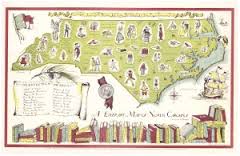
While other states may challenge the epithet, I have reason to believe that North Carolina, the Land of the Long Leaf Pine, the Tar Heel State, once known as the “Good Roads State,” really is the “Writingest State.” I’ve always loved writing–maybe as much as I love reading. Once I moved here, though, I discovered the most supportive literary community imaginable.
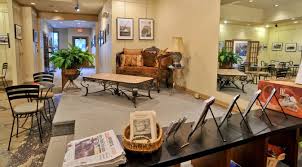
The old motto “Think global; act local” certainly applies. One of the best discoveries I made a few years back, when I got started writing poetry again, was the once-a-month phenomenon that is Poetry Hickory. For more than 100 months now, Scott Owens has hosted this second Tuesday meeting at Taste Full Beans, a downtown coffee show he now owns. Every month, participants hear readings by a couple of poets with recent published chapbooks or collections. Beforehand, Writers’ Night Out kicks off, often with a workshop by the one of the featured writers. The open mic usually gives a chance at the microphone for experienced readers and novices as well. The crowd that attends, many regulars and other drop-ins, ranges from thirty to fifty on some nights.

From my connections there, I’ve become involved first in the Poetry Council of North Carolina and then the North Carolina Poetry Society, comprised of poets who actively support writers in the state. The North Carolina poet laureate post is also much more than just a title (as the governor found out in the past year when he tried to circumvent the nomination process to name his own selection–stirring up quite a brouhaha). Fred Chappell, Kathryn Stripling Byer, Cathy Smith Bower, Joseph Bathanti, and now Shelby Stephenson have actively promoted poetry in the state, making appearances at school and small town libraries, as well as at more prestigious events.
Poetry is just a part of the body of great writing in the state. Through the North Carolina Writers Network and through my involvement in North Carolina English Teachers Association and its Ragan-Rubin award, honoring Sam Ragan and Louis Rubin and my college’s Laurette LePrevost Writers Symposium, I have met Ron Rash, Clyde Edgerton, Wiley Cash, Allan Gurganus, Silas House, Lee Smith, Jill McCorkle, Marianne Gingher, and so many more. Over and over, I have seen that established, successful writers nurture aspiring writers.
Maybe there’s something in the water here, something in the air. I think I’ll drink deeply, take a big breath, and then I’ll sit down and write.
 Alabama Tar Heel