My senses take me back to the class of 1990.
I’ve heard the term “density” used to explain why elderly people can remember everything about childhood, yet not whether they are lunch or not. Likewise, I sometimes can’t recall the name of a student I had in class last semester, but I can probably name everyone in my first senior class–and even remember the topics of many of their research papers.
I started my teaching career in a corner room in the high school building of Mars Hill Bible School, a room that my mother says was the biology class room when she was a student there. Sure enough there was a sink and cabinet in the corner. She said back then the science equipment included one microscope and a two-headed pig fetus in a jar. Thank goodness they were gone before I got there.
This was a no frills classroom for me too. I seem to remember concrete floors, though I suspect they were tile since I remember our third grade class taking a day to lay tips in our room in the building down the ramp from the high school building. When I think of that class room, I think of the smells. The location of the boys’ bathroom just catty-cornered across the hall probably contributed to the ambience. I suspect a blind man could find the boys’ bathroom in any school without help. Since we still had blackboards–not whiteboards or Smartboards–chalk dust hung in the air as well.
That particular year, I inherited the responsibility as senior sponsor for helping a volunteer who was directing the senior play Taming of the Shrew, scheduled by the teacher I replaced. My room served as green room, since the doors to backstage to the auditorium was nearby. When the “actors” weren’t on stage, they’d hangout in my room, in theory doing homework; in reality, playing cassette tapes in their boom boxes. The song I most associate with that time was Vanilla Ice’s “Ice, Ice Baby” because my room turned into a makeshift dance floor.
That year, since we were putting in late hours with practice, then needing to be wide awake for class, I introduced these seventeen- and eighteen-year-olds to coffee. That sink and cabinet were perfect for setting up a coffee maker and hiding the students’ individual mugs they brought from home. With all the other things students could get into, Maxwell House seemed a benign alternative. Whoever arrived first made a fresh pot every morning, and as long as it didn’t interfere with class time, they could sip their coffee if I could. The coffee aroma also helped to mask more unpleasant smells wafting in from the hall.
A large storage closet in the room also offered a hideaway for students who loved playing card games–considered contraband in those days. The class room also had a full wall of tilt-out windows offering a clear view of the gymnasium, the hilltop track and the traffic entering campus from Cox Creek Parkway, the main road. The sunlight brightened the room, but to avoid distraction, I arranged the room with the rows of old wood and metal desks facing the other direction.
Twenty-five years later, I can name who sat where, who went together to prom, whose rough draft mysteriously disappeared from the stack of papers turned in. The exchange student from Indonesia wrote her research paper on Charles Dickens. Another student writing on the same author offered enough assistance to help her get through without violating academic integrity.
That group of students had a wicked sense of humor. They were yard rollers extraordinaire. The first month of teaching, my yard was rolled three times in one week. No wimpy job either. The finished product looked like something the artist Christo might have pulled off if he’d had my house instead of the pyramids or the Eiffel Tower as his subject. They probably jeopardized my career when I served as chaperone as they decorated the unfinished lower level of the school as the “Punkin Day” spook house. Somehow none of them could explain to my satisfaction or the administrations’ where they got their old tombstones–with names and dates. A gigantic concrete culvert that appeared looked strangely similar to the ones used in the construction of the new Kmart. I won’t even talk about the damage to lockers. Somehow, eventually, we made it through the year, reading good books, seeing–and performing–Shakespearean plays, learning to write good paragraphs that led to good essays.
That year some geologists were predicting earthquakes along the fault line in Mississippi. There were suggestions that we should have earthquake drills. One of the students joked that the principal Mr. Barfield, a portly man, could run in and stomp to simulate tremors. He just happened to be right outside the door, so–good sport that he was–he did just that.
These were also the same students who came and went for three periods, smiling at me oddly, but not telling me that I had arrived at school wearing one blue shoe and one purple one. When I asked why no one told me, they said, “We would have, but we wanted everyone else to enjoy it.”
I will say that we enjoyed ourselves that year, and I’ve kept up with many of them as they’ve become adults, functioning successfully in society. A few years ago, reading a book by Carol Jago, I read with interest the statement that teachers could consider what we hoped our students would still remember from our class ten years from now. At the time, Facebook wasn’t around, but I used classmates.com to seek them out and first, telling them I hoped in my inexperience I “did no harm,” then asking what they remembered. The answers, quite good humored, made me smile–even laugh. I think I even caught a whiff of chalkdust.
Part of Learning Is Speaking the Language.
 Of all the areas I might choose to write about today, I think I’ll go the route most obvious–and pleasurable–for me. After all, I’m weary of comma splices, usage errors, dangling participles, split infinitives. And it’s summer.
Instead, I’ll put my mind and my pen to writing about one of my later endeavors, playing mandolin. I’ve always loved music, though my childhood piano lessons could have borne more fruit if I’d applied myself. The background understanding of keys and notes and chords was lying there fallow, but I kept fighting this nagging desire to learn to play the mandolin. I may have been deceived, thinking its compact size, easy to take along wherever I go, suggested it might be easy to play. Not so. But I loved the sound too–maybe most of all.
I was fifty before I admitted this item on my bucket list not only to myself but aloud. I feared I had waited too long to start something new, something else. Then a friend who owned a decent Old Kentucky mandolin but had turned her attention to playing fiddle suggested I might borrow hers and give it a try. I did just that. I picked up a couple of beginners’ books and sat down earnestly to try to play. Plunk-a-plunk. Every song, according to my husband, sounded like “Yankee Doodle.” So I began lessons, once a week for thirty minutes at the local Music Center.
My teacher, a nice man, a patient teacher, was actually a dobro player, but he took me on. Each week, he started by tuning my mandolin, and then began to teach me song by song, playing tab, not standard notation. Tablature allowed me to see just where on the fret of each pair of strings I put my fingers. He also taught me chords, starting with the must common ones–G, with its long stretch, then easier D, C, A.
Using a book a friend gave me for my birthday, he had me study theory, the circle of fifths, for instance. Then our lessons fell into a pattern. One of the first songs I mastered “Angeline the Baker,” we played often. He’d play melody while I chopped chords, then I’d play the melody while he accompanied me with rhythm on his guitar. Eventually, I recognized that I was taking the same lesson every week. Only the song changed. I took a break. (“It’s not you, it’s me,” I imagined telling him if he asked why I left.
Instead, I found another teacher, the husband of a colleague–both of them friends, both of them talented musicians. Patrick had recently retired from teaching middle school band–and if that doesn’t qualify a man for sainthood, I don’t know what does. He immediately began to break bad habits, to take me back to basics. He insisted I dispense with tab and learn to read music (or to revive what I knew of reading music and apply it to the mandolin instead of the piano.) He made me learn pick position and proper hand and arm position. He taught me to learn to play by ear, sometimes spending two or three entire lessons picking out one eighteen-second break as played by Sam Bush, stopping the recording, trying to reproduce the notes, starting again.
I learned a whole new language–arpeggios, minor chords, fifths, open strings, cheat chords. I learned the magic of the mandolin–the way a song could easily be moved to a new chord with just a simple move up or down the neck of the mandolin. I learned my songs by heart. I learned that G chords (and A’s, C’s D’s–all of them) can be found up and down the neck of the mandolin.
Best of all, I learned to play with other people, the real pleasure of music. Even when I wanted to sit on the outside of the jam circle, I was beginning to find my place. There’s such a generosity of spirit among those who play.
Finally, at the encouragement of the friend who loaned me–and eventually sold me–my first mandolin, I signed up for the Swannanoa Gathering Old Time Music and Dance Week held each July at Warren Wilson College. For a week, I slept in an un-airconditioned dorm and took three classes a day–Mandolin II, Shape-Note Singing, and Old-Time Music History. I mixed with people of all levels of ability–professional musicians and rank beginners like me. Even though I was a little over my head in Mandolin II, I learned much more than I would have in an easier class.
More than simply learning a few new songs–“Old Baldy Kick’em Up,” “Grey Eagle,” “In the Willow Garden,” I found a place in a new community with people of all ages from all over the world. Each evening after dinner, we could join “jam” sessions led by the faculty, giving even the beginners a pace at which we could play along. We had sing-alongs, concerts, square dances, and Honky Tonk Night.”
The next year I was back–same time, same place.
This Sunday I leave for my fifth Gathering, taking my granddaughter Avery along this time. She has a purple fiddle she’s ready to learn to play. We’ll be roommates, and I’ll have to come in at night earlier than I am accustomed. I have my tuner, a box of picks, copies of favorite songs and lyrics. I’ll be playing “Waterbound,” and “Cripple Creek,” “Cluck Old Hen,” and “Sail Away, Ladies.”
It’s going to feel like Old Home Week.
Expert or Dilettante?
 People who know me sometimes tease me about my wide range of interests–and justly so. I identify much more strongly with the Renaissance men than with specialists. Want clear proof? I have an accounting major, but I taught English for 25 years. In the meantime, I’ve taught exercise and Lamaze; I’ve sold needlework kits and scrapbooking supplies. I’ve sold real estate. For fun, I play mandolin, take photographs, and enjoy making art. I write poetry, fiction, and book reviews. And, obviously, I blog.
Reading this week’s chapter of Write Your Heart Out has given me the chance to focus on the additional benefits of my experiences, particularly as they affect my writing life. When I write about these areas of my life, I have so many different languages to use. I can shift from debits and credits, income statements and balance sheets straight into chords, keys, and arpeggios or dactyls, assonance, and sibilance.
I’ve had travel experiences that give me a powerful sense of place–from the Grand Canyon to Istanbul’s Grand Bazaar, from the Eiffel Tower to the Empire State Building, from Panama City Beach to the historic beaches of Normandy. My “normal” life, however, offers me another sense of place–the specificity of a church basement where Lamaze couples sit on the floor on pillows and blankets, the crowded hallways of a high school building, an old-time music jam circle under a canopy beneath the July night sky.
I love the challenge of taking my readers with me to those places through their senses–the smells of a market in Guangzhou, with monkeys, rabbits, eels, and lizards offered for culinary delight, the frenzied pace inside the concession stand at the Hickory Crawdads’ stadium, preparing and serving up popcorn, hot dogs, fountain drinks, and pretzels to spectators waiting ten deep, the simultaneous clicks of twenty-five sets of fingers on keyboards in a comp class when a deadline falls at the end of a fifty-minute class, the moan and roar as the printer warms up and starts cranking out pages at the end of the hour, students shuffling through the pages as they emerge, trying to recognize their own final draft–and the heft of my paper load as I go back to my office, aware that the weight translates into hours of reading, marking, grading.
As usual, my challenge this week (and beyond) is narrowing my choices, finding a focus for what to write right now!
Week 7: Writing and Work
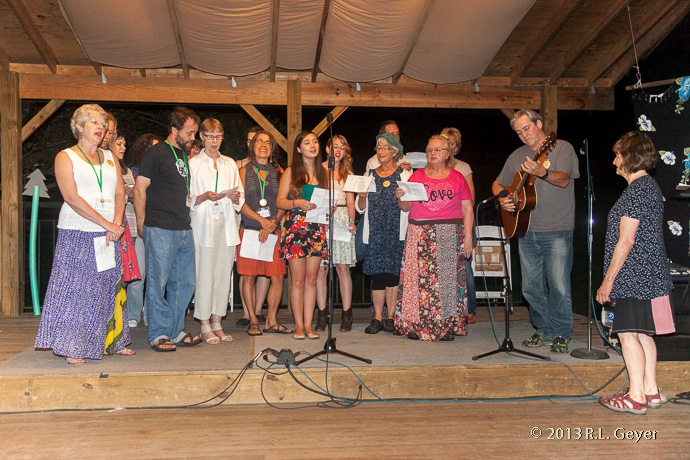 Last week’s chapter gave me a lot to think about, but was harder to write about–alone. Chapter 8, however, had me scribbling notes in all the margins. The title itself might not seem inspiring. After all, sometimes we write to escape from work. McClanahan doesn’t use these particular words, but in the beginning of the chapter, I thought of the distinction between one’s vocation and avocation, how me make a living and how we make a life.
Part I: You, the Expert
Look back at your chapter 3 notes to see if you made a list of subjects and hobbies you’ve explored. If you didn’t make it, then start now; if you did, then expand it:
* What are your areas of experience?
* In what ways have you gained expertise–good or bad? For example, after my husband’s surgery, I now know more about aortic valve replacement surgery–and recovery–than I ever hoped to know. And I took notes!
* Get specific with your list. As she suggests, don’t just say “I’m a cook [or teacher or nurse]” but tell us more.
* Be sure to include identities others may not be aware of, maybe identities or subjects you wish to know more about. (I wish I could be a ……)
On p. 153, you’re encouraged to pick one and fill a page.
Part II: Inside Information
In areas in which you have spent time, you have accumulated a wealth of knowledge. Start with one particular area of work–or experience–and identify some of these elements:
* What is the jargon peculiar to the field? In a later draft, you would need to consider your reader’s familiarity, deciding when to define or give context clues. In addition to my twenty-five years teaching English, I also spent many, many years teaching Lamaze childbirth preparation classes, which expanded my vocabulary: dilatation and effacement, measured in centimeters and percentages, presentation, transition, contraction, anterior and posterior.
* Describe the setting involved–inside or out? What kind of building? Describe the room or space.
* What concrete nouns are associated with the field? She mentions in this chapter Thomas Lynch’s poems and stories using his experience as a funeral director. Once you have a setting, you decide which objects to place inside of it that are useful for communicating what you know to your reader (or for helping you to relive an experience.)
Part III: You have five senses; use them all!
You may have made a good start as you’ve considered the noun-items. Have you ever noticed how often we limit description to the visual? Often, it’s the other four that put us back into a place or time: Explore
* the smells of the workplace. Think of aromas and/or odors associated with a nursing home or an elementary school cafeteria, your flower garden, the pool at the local rec center.
* the tastes, if applicable. This is easy if you’re describing your cooking experiences, but you might also think of the taste of your first communion or the first bite of watermelon your grandfather offered right there in his garden, serve on the point of his pocket knife.
* the feelings–and here I think not only of hot/cold, hard/soft, but a sense of motion too–driving the mail route with your arm out the open window, catching the breeze, feeling the sun, the resistance of the little mailbox doors.
* the sounds: the dentists’ drill, the Musak playing in the background, the hee hee hoo of pregnant women–and their “coaches” practicing labor breathing patterns.
Part IV: The Dance
One of my favorite freshman comp assignments–a nice break after we finished our big research paper–was a process paper. But they had to write about a learning process, either something someone taught them, something they learned on their own, or something they tried to learn but failed. The freedom to use first person after being restricted to third most of the semester was a breath of fresh air for the students. An added benefit was that they could not find this paper on line!
Think of the processes you go through either in your work or in your avocations. What do you know how to do that others may not. What are the steps? You aren’t writing a “how-to”; that’s a different kind of writing. For ow, write to inform, not to instruct. What verbs are particular to the process. Use good strong active verbs!
Part V: A Day in the Life
* Describe a typical day in this particular field
* Write about one particular day–maybe a day when things didn’t go as expected.
This was one part of the chapter where my margins filled up as I thought about chaperoning student travel or a particular memorable day while teaching the Holocaust class when the lessons on man’s inhumanity of man sparked a particular act of kindness and generosity I’ll never forget. I also remembered when (and why) I quit my first full-time job. I could also describe a very temporary job during college when my suite mates and I decided to get a job at the Western Sizzling Steak House. (That’ll make anyone decide to finish college for sure.)
Consider writing about other “stances,” as McClanahan calls them: When you have been the
*duck out of water
*critic
*late bloomer
*amateur
*perpetual learner
I hope you take the time to read the chapter. I may have more to add this week about the different forms (p. 165-6) this writing can take.
My Writing with Groups
 As I mentioned on the introductory post for this week, I feel most successful, most motivated, most accountable when I am part of a writing group. While I’ve been scrawling away all of my life, it took me awhile to feel confident enough to share my writing with other writers. I find that sometimes, though, I’m more comfortable doing so than sharing with non-writing friends or family members. There’s something liberating about telling my own story (in prose or poetry) to someone who wasn’t part of the event. As Rebecca McClanahan mentioned in an earlier chapter, our own recollection of events are sometimes flawed or at best filtered through our own selective memory.
When I write poetry, particularly that which gives the appearance of autobiography, I have to worry that readers will take it all literally. (I had a poem published in our school lit mag and a student asked me about it, assuming it was all completely true–a poem in which I had referred to Miller-marinated kisses from college boys!)
When I started back writing poetry several years ago, I did so via Poetic Asides during the April poem-a-day challenge. I knew no one participating, but I had such fun writing and responding to others’ poems. I believe it’s those responses that kept writers coming back. The next year, when the number of posts each day grew too numerous to wade through, one of the online poets to whom I had commented contacted several “regulars” and asked if we were interested in forming a smaller group within the community. The thirteen of us were spread across the U.S. and four other countries, but we shared more than just our poems. Since, some of us have visited others. Laurie flew out from Texas to visit me last year. Sharon and Connie and maybe others are coming in September to a “Fall Face-to-Face in the Foothills” poetry event we are planning here just to give us a chance to get to know the “friends we’ve never met yet.”
My fiction group grew out of an encounter at Poetry Hickory. I knew Susan because we had mutual friends, so I was aware she had a novel Goliath coming out with St. Martin’s Press. She had an acquaintance from a creative writing class, who had a friends. . . . This group has changed some but has stayed small. We first met and brought 10-12 pages of our current writing projects, exchanged them for critiquing to be shared at the next month’s meeting.
We also went together to Weymouth Center, as I mentioned before, spending a productive few days one February (with the lovely surprise of snow and a fox hunt on the grounds while we were there.) Some of us are returning in August.
We are trying a new tack now. We set our next meeting date and agreed to send our drafts for comments one week before our meeting, and to send back responses to those drafts the day before our meeting so we could discuss and ask questions at our meeting (set for tomorrow).
This summer I also helped to form a poetry group involving five women (including me) who know each other from local poetry events. Most of us have been writing awhile, but needed the push to submit more frequently for publication and to begin putting together a chapbook or collection. We share calls for submission when we meet. At our last meeting, three of us had poems we are considering for our collection. We decided on a theme and even a title, and we’re asking our group members to give us feedback about inclusion and organization.
Since I’ve taken some of the earlier chapters seriously, I have been reporting almost every day to my “office”–the local public library–where I work on my own writing and respond in a timely fashion to my writing partners’ work too.
I will admit, though, that having this regular “date” online–taking the responsibility for studying the section of our text each week and putting together the posts to share with you has been invigorating.
Week 6: Chapter 7 The Writer as WE
 I’ll make a confession: one reason I wanted to take on this two-month writing endeavor is that I am at heart a social animal. I don’t know how much writing I would complete if it were all done in solitude. This week floating around Facebook is a quick and easy, unofficial Myers-Briggs test. I do know that the results matched perfectly to my official pen-and-paper test: ENFP. While some of the letters are less clear to me, I know the E for Extravert is me to a T.
This week, as we turn our focus from I to “We” writing, I’m eager to hear how others have engaged in writing with others, and I want to know what new ideas were inspired by this particular chapter. I think I read it with my brains blowing sparks.
Part I: Writing Partners
Have you worked with writing partners? McClanahan’s suggestion of setting a time to write side-by-side with someone else was an appealing idea I hadn’t considered. We’ve considered already how, when, and where we write best. The idea of having a regular writing appointment with someone might be worth trying. I wish those of us sharing this space this summer were close enough to do just that. Since we are spread out, how might we put this tactic into action?
If you’re journaling, take time to write about your social writing experiences. When have you worked with another person–or a group–to accomplish a shared goal? Whom do you allow (or beg) to read what you write? I’m always interested to hear writers who say, of their spouses, “[s]he is my first and best reader.” There is a level of trust necessary to share what we write.
I’m getting ready to go back to the Weymouth Center for the Arts in Southern Pines, NC, a lovely old home set on four hundred acres where writers can apply to spend time in residence writing. I’ve gone twice before with some of these same writing friends. Since we all have our own rooms, along with a shared kitchen and a living room lined with pictures of writers in the North Carolina Writers’ Hall of Fame, we spend most of our days writing in our rooms (or whatever corner we carve out), coming together for meals and then for sharing some of what we’ve written. It’s a perfect balance of society and solitude.
What “ground rules” would you require to make this kind of writing partnership effective?
Part II: Small Writing Groups
I hope I don’t seem unfaithful, but I have two writing groups: one for poetry, one for prose. We meet at different times, with different structure. Some members of one group may have met some of the others (since many of us cross paths at Poetry Hickory, our local monthly event), but I needed the two groups for my different kinds of writing.
Have you written with small groups before? Did you find the interaction successful? pleasant? Did the interaction have a beginning and ending time or was it an ongoing group?
Do you prefer working with a group that has closely related writing interests? similar goals? diverse interests? Do you prefer structure or flexibility? What kind of place works best for you?
In my two groups, we developed our expectations and even dates and “assignments.” In my prose group, we share what we are doing and critique one another’s writing. In my poetry group, most of us have notebooks of work completed. Now we’re encouraging one another (1. to submit individual poems for publication; (2. to assemble a collection or chapbook for publication.
In both groups, it helps to have someone who will take notes of what we do at meetings, and even more important, what we said we would do next. A quick email after the meeting helps. (Have you been in organizations in which the minutes of the meeting aren’t sent around until just before the next meeting–just enough time for you to think, “Oh shoot! I was supposed to…..”?)
Other than this summer project, have you engaged in online small groups? Some of my most prolific writing has been accomplished in online groups. Even though I am interacting with people I haven’t met face to face, we expect one another to “show up” when prompts are posted and to read and respond to one another’s writing.
One of the most valuable parts of small writing groups, for me, is the sense of audience I gain. When I’m writing something of importance to me, I am able to imagine my group members as my readers.
Part III: Larger Groups and Projects
First, you might list the established groups of which you are already a member. I’m not talking about writing groups now, but social or family units, organized or informal groups. I can think of several with ready-made writing project possibilities. My father’s 80th birthday is at the end of this month, so my sisters and I are soliciting letters, pictures, and written memories from friends who have known him over the years. Since he’s a preacher, there are members of several congregations where he has served who have stories to share.
We did something similar for my parents’ fiftieth wedding anniversary, putting everything into a scrapbook–that made them both tear up a little! Success.
I’m also a teacher–and English teacher–so I dream of putting together a writing project in which experienced teachers could share ideas with beginning teachers. I can also imagine putting together a writing project with our ladies group at church. I’ve wanted for a while to do a project modeled after “By the Book” in the NYTimes Book Review, having my book club members or larger group of reading friends to answer the questions posed to an individual author each week: What’s on your bedside table? What kind of reader were you as a child? What book are you embarrassed not to have read? If you were hosting a literary dinner party, whom would you invite?
Think of groups you might enlist on a short- or long-term shared writing project.
Part IV: Doing Something About It
One more idea that involved collaboration, even though you might be the one doing the writing: interviews. You might start by interviewing your oldest living relatives and move chronologically to the younger members. Record their stories. I’ve also loved hearing of student projects finding survivors or WWII and interviewing them. When you read the number we lose every day, this becomes more imperative. Visit a senior living facility (That’s what I’m going to call the nursing home when I go!) and listen! Remember that the first step in writing is paying attention. It’s also one of the greatest gifts you can give.
Keep in mind that no project gets started on its own. Which of the ideas included in this week’s chapter speak to you? What would it take to get them off the ground?
My Fifty-eighth Fourth: Looking Back
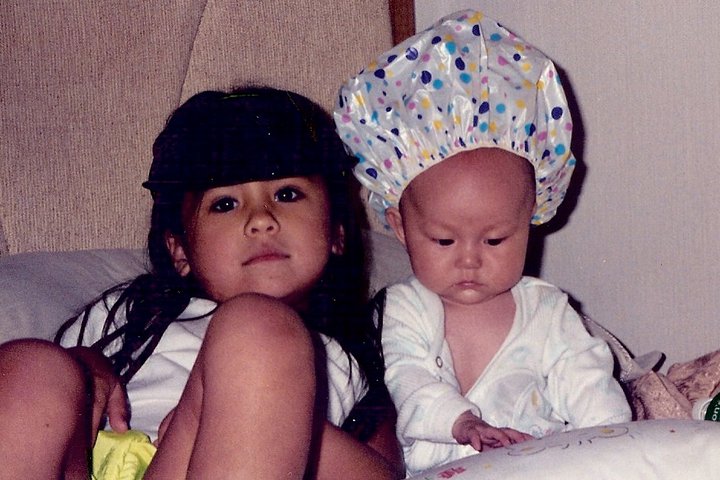 One of those unsubstantiated news polls going around claimed that a large percentage of people questioned didn’t know why we celebrated the Fourth of July. I don’t trust polls in general, since (1. I rarely answer them with any degree of seriousness; (2. I have my doubts about people who have time or inclination in the middle of the day (or supper) to answer survey questions.
I do remember one young lady I taught who asked her new employer if they ever got any holidays. When she was told they had Independence Day off, she said, “Independence Day? Good lands! What’s that?” In all fairness, she’s also the girl who got up during home room to check the dictionary when someone told her “gullible” wasn’t in there.)
I’ve had so many memorable Fourths. The best childhood memories always included an early ride to Mars Hill school to buy several containers of chicken stew. A year or two, I also helped the previous night as a chicken picker or tater chopper, with everyone working together, singing old gospel hymns as we worked. The authentic recipe requires massive quantities cooked over a fire in big cast iron pots, stirred with a boat paddle. It has taken me years since I moved from North Alabama to figure out how to make a smaller quantity that tastes like the original. I think I may be there.
One particularly special Fourth, the Bicentennial celebration, I spent in Philadelphia with my friend Robin and her husband, a new medical student there. I had helped them moved not much before, and I begged to join them for the big celebration. Elton John’s “Philadelphia Freedom” was a hit that week. I think “Rhinestone Cowboy” too. We dig all the fun tourist points, touched, the Liberty Bell (right on the crack), sat in a park one night listening to patriotic music accompanied by fireworks (and yes, they were red, white, and blue!)
We watched the countdown clock to the precise second when the Declaration of Independence was signed, and then on the evening of the Fourth, we went to the rooftop to watch a synchronized fireworks show across the city, reportedly using more gun powder than was shot during the entire Revolutionary War.
In 1997, I left Charlotte on the afternoon of the Fourth flying to China with my best friend Debbie and her family to adopt their second daughter Allie. Since they had chosen to bring their five-year-old Darby along for the two weeks, I came to be an extra set of hands. The transition from poolside party to Hong Kong, just that week handed over from Great Britain to China, was a bit of a culture shock, especially since the Chinese military made quite a presence. Nothing makes one aware of nationality like spending time in a city of six million people (Wuhan in Hubei provide) without seeing any other Caucasians except our traveling companions. I must say, though, we were treating with kindness as well as curiosity.
For the first several years in North Carolina, the Fourth was a day we spent traditionally with friends, an all-day event starting with early morning golf, a day at the pool or riding the pontoon on Lake Hickory, then Bar-B-Q and fixings, massive fireworks, and some beautiful voices singing our best-loved patriotic songs. That tradition was broken by the untimely loss of our dear friend and host. Since then, the “usuals” have dispersed, building other new traditions. I have no doubt that I’m not alone in stopping for awhile today to remember our friend.
Good Intentions: The Ones That Got Away
 I’ve rarely regretted sending a letter, but so many times, I’ve regretting the ones I waited too long to write—or wrote but never got around to mailing. Growing up, my mother warned me to be careful about what I wrote. I believe she had a bad experience in high school when a letter she wrote to a boy ended up being shared throughout the classroom. Today with so much over-sharing on Facebook, when even middle school students made poor decisions and end up with not just words but pictures out there in cyberspace for all time, it’s hard to remember a time when mere words on a page could cause angst.
I can think of so many times when I’ve failed so write a thank you note for small kindnesses. I probably still owe some apologies, though I hope the intended recipients have either forgotten or forgiven. If the road to hell really is paved with good intentions, then mine is a shovel-ready project.
If I’ve learned anything this week, it’s that people cherish letters. They are like time capsules that can warm our hearts again and again—or make us laugh or cry. So many of you have told me in the last few days about the letters that are special to you. I hope somewhere some of my old letters are hanging out in boxes in attics, just waiting to remind someone just why we mattered to each other.
I can’t do much about the letters I haven’t written so far, but I have tried to make communication as easy as possible for myself. For correspondence with some people, I need long, lined legal pad pages, nothing fancy, quantity over quality. At other times, however, a brief note, words chosen carefully, can be enough. I keep boxes of little note cards in my office closet. For even quicker message—just because—I have decided that instead of hoarding all those postcards I buy everywhere I go, I’ll make sure I always have a supply of postcards stamps on hard, so I can dash off a note. Just think: I can entertain the postman too.
My Life in Letters
 Every time I try to clean out my attic thoroughly, I end up being sidetracked, going through the boxes and crates of all my souvenirs. I had to confess to one rather amusing discovery: in an envelope addressed to me and postmarked 1974, I found an application for the National Procrastination Society. Ironically, I never got around to completing it and returning it. I guess I’m an official member by default.
Only by chance do I uncover some of the letters I know are there: one from my first elementary school Elaine, written during the year and a half my family moved away from Florence, Alabama, to Columbia, Tennessee. She included her own review of her most recent book list–the Nancy Drew mysteries she had enjoyed–and asked for a list of the titles I’d read. She also spoke is great anticipation of the movie Mary Poppins, set to be released that Christmas. Our letters are fewer now, but we still include book recommendations.
After my family moved back to Florence in 1966, I began receiving letters from my friend and neighbor Robin (who still writes me to this day). Over the years, I had pen pals I’d only met once or twice (Candy Parks).
By the time I left home for college, I already had the built-in urge to check the mail. Luckily, my school mailbox (#58, combination J-H-F) was frequently filled. My mother wrote, naturally, but my daddy wrote too–and often. My best friend Debbie also kept me updated. Since I left for college with a boyfriend, I had all those letters too. (Even better, after we broke up, he gave me back all the ones I had written to him. What a stroke of luck!)
I have also saved a number of letters from a friend from back home, just a few years older than me, a newlywed herself when we became friends. I still have one letter telling me she was excepting her first–and second–baby (twin girls), adding that my own mother’s ability to manage five daughters had given her confidence.
Even though I’ve been out of college almost 39 years, I’ve managed to keep up with so many friends, some I haven’t seen since–or at most a couple of times, but I imagine I could take a cross-country trip and never have to find a hotel room. I could just couch surf across the U.S.A. I also have letters and year-after-year of Christmas cards from lots of friends, letting me watch their children grow up. My friend Sally died of cancer a few years ago, but she kept the letters coming up until the end, even though we hadn’t seen each other since our college graduation in 1976. The correspondence has moved from wedding invitations to birth announcements, and now retirement plans.
Having just retired from teaching, I left my office, where I had four four-drawer filing cabinets, dragging home all my files in boxes. Now I’m feeling the urge to head down to the local Habitat store to snag a couple of file cabinets (for starters). Not only do I want to get my teaching files sorted, purging duplicates, but I think I might like to start a filing system for all those letters, those records of friendships that have lived on before Facebook, saved in their original envelopes in handwritten I recognized easily at a glance.
I think of all the great men and women whose lives have been chronicled by biographers, publications made possible because of the trail left by letters. Though I am thankful so often for the speed and efficiency of email and texting, I fear that the sheer quantity, though it made indeed remain out there forever in cyberspace, may not lead to the same treasures.
Week Five: The Power of Letters
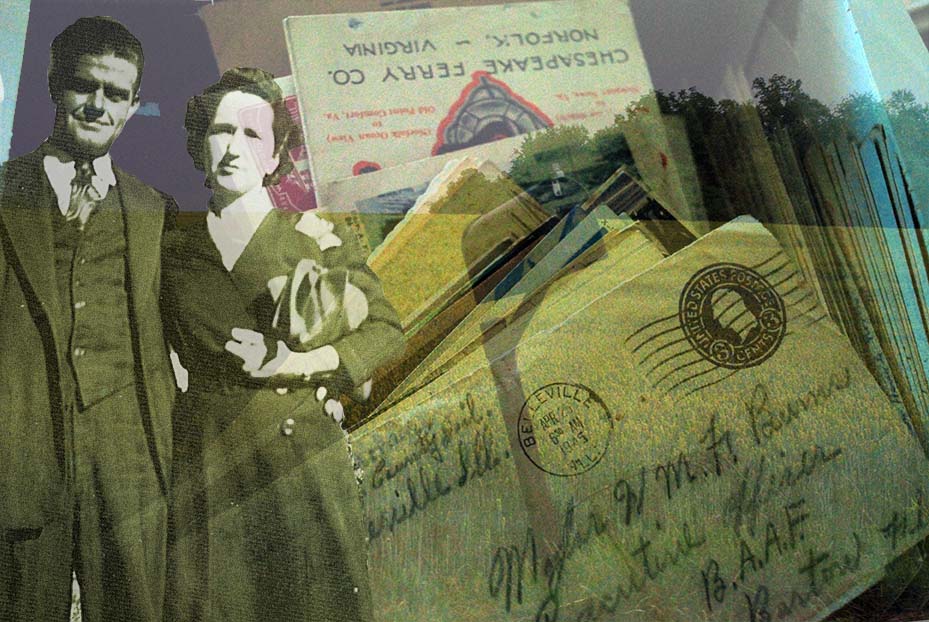 I suspect I’m going to need to spend some time in the attic this week. I don’t need to respond to this particular altar call; no one has to convince me of the power of letters.However, I had not thoughtfully considered how letters could inform my other writing. This should be fun.
I challenge you to write (and mail) at least one letter every day this week. You may already have letters or notes you need to write; there may be friends with whom you’ve fallen out of touch. Send someone a mailbox surprise.
Part I: Your epistolary history
Begin by thinking about the role letters play (or have played) in your life. When something happens to you—good or bad—do you think, “Whom can I write and tell?” Do you, like McClanahan, have boxes of letters you can’t toss, that you would perhaps rescue from a house fire?
First some questions:
Who wrote these letters that you keep?
Why have you kept these in particular?
Are they one half of a dialogue from the past?
Who has the ones you wrote?
What is your role in your life of letters?
I have always been a letter writer, and I learned long, long ago that if I wanted to maintain some of my important relationships, I couldn’t count on an even exchange. If I had something to write and it wasn’t my “turn,”I still wrote.
Take some times to think of the letters most worth keeping—put your hands on them if you can. If a letter was addressed to you, would it communicate the same message to a stranger? If not, can you invoke your memory to fill in the blanks?
Pay attention to the writer’s voice in each letter. If it was written by someone you know well, do the words convey that person’s personality? the mood at the time?
Do you have letters among your keepsakes that were neither written to or by you? How did they come into your possession? Did you know both parties? Just one? What would you ask them if you could?
I have a letter written by my great grandmother in her beautiful penmanship to her future husband while they were still courting. Although his name was James, she called him “Dear Jacobus.” The coyness and affection are so tactfully delivered in the letter. It pains me that since it was written in pencil, it has faded over the years. I found another letter written to her by her preacher after she was baptized, a beautiful letter of encouragement that was anything but a form letter. The closeness between the two is so apparent.
A packrat and a sorter, I’m trying to work out a system for my letters—and believe me, I have boxes and boxes, even though I try to purge. Take a little time to sort through yours, looking for a system. Give yourself permission to stop and read a few. Take notes if you see tidbits you might want to include in a writing project now or in the future.
Part II: Qualities of effective letters
As you consider these qualities detailed on pages 106-107, consider how they also enrich your other avenues of writing:
* Letters are a bridge between private (“I”) writing and public or social writing.
* If you’ve been comfortable with journaling but feel squeamish about an imagined audience, a letter gives you a real reader, one you choose. Remember, too, that a letter can be addressed to more than one person—but it doesn’t have to be.
* Letter writing helps you to develop your own voice. You can even let yourself imagine how the addressee will read your words and respond to you.
* Letters can be a “rehearsal” for your other writing—prose or poetry.
Part III: What makes a letter memorable?
In Part I, you considered the letters you kept that others have written to you. Now think of the letters you have written, the ones that may have left your possession—and control long ago, but that had an impact. It may not have been the effect you intended either, right? What about the ones you wrote and didn’t mail?
Do they reflect the qualities of memorable pieces of writing listed beginning on p. 108?
* The need to say it. If you’re a lifelong letter-writer, as I am, your first instinct when you need to process something is to write a letter. Especially before the easy access of internet, these kinds of letters kept me connected to friends in other towns too. Sometimes, too, a letter lets you say something you can’t verbalize out loud.
* Personal voice. When writing goes well—especially letter writing—you can almost hear yourself speaking, imagining the pauses, picking just the right words.
* A feeling of intimacy. Because a letter is a form of a gift, the writing forges a special connection between you the writer and your reader. Unless you begin all your letters, To Whom It May Concern, the identity of the intended recipient is clear—and significant.
* Time, reflection and discovery. Personally, I believe this is the most important distinction between a letter and an email. When you take the time to write—especially by hand, you have the opportunity to revise, rewrite, delete. With an email, once you click “Send,” there’s no turning back—even though sitcom characters may try. One lesson that transfers smoothly from letter-writing to any other kind of writing you choose: Give yourself a little time after you write. Put it aside and let it “cool off.” Immediately after writing, we tend either to think, “This is the worst thing I’ve ever written” or “This is a masterpiece!” Neither is usually exactly right. A little time and distance can allow you to be sure what you meant to communicate has come through clearly.
I’ll let you consider the discussion of email; I do remember years ago reading Barbara Kingsolver’s novel Animal Dreams, in which the protagonist was exchanging letters with her sister, who was somewhere in Central America during a time of political turmoil. It struck me that she saw the lag time between letters and responses as a positive, not a negative. How different from our own “real-time” communication when we sometimes send texts that cross paths simultaneously, our answers already outdated by the time we hit send.
Part IV: Special Purpose Letters
McClanahan gives special attention to sympathy letters in this chapter. There are so many situations for which we need a little handbook on “What not to say.” I was struck by her comment, “The only sympathy letters that ever caused me pain were the ones I didn’t receive” (112).
While I’ve lived a blessed life, with most family losses coming from old age rather than tragedy, as a preacher’s kid, I was always just a few degrees of separation from much loss. I was probably taught more, implicitly, by my mother. A much quieter person than I, my mother has a gift for writing notes. I know this not from her, but from the account of others who have received her small acts of kindness. I do remember her telling me that saying nothing is usually the worst thing to do. (Second worse, I imagine, is saying too much!)
For those of you who have had more firsthand experience, I would love to hear your response to her suggestions (113-116). Are there others you could add?
I will make one suggestion: Facebook walls are not the best place to express sympathy at a recent loss. Even on the anniversary of a loss, I try to keep my words private. It’s hard to beat a handwritten note, stamped and mailed.
Love Letters: On the other end of the letter-writing spectrum are love letters. If you have the ideal recipient (as I do!) try out some of McClanahan’s tips:
* Construct a timeline of memories
* Share your dreams (and hopes and ambitions)
* “Let me count the ways”—make a list of your loved one’s qualities. Yes, humor is acceptable.
* Share a day in your life—especially if you are apart.
Letters of Gratitude: If there’s someone who has had some positive impact on your life, and you haven’t said thank you, what are you waiting for?
Thank you letters—even long postponed—are true gifts. They make their way into other people’s souvenir boxes. Best of all, you may receive letters of response or rekindle relationships.
Some of my most prized letters have come from former students. Some are slipped onto my desk at the end of a school year. Others show up out of the blue—and often when I need them most. That’s why during Teacher Appreciation Week one year, I decided to write to Flora Hopper, my fourth and fifth grade teacher (and ninth grade Latin teacher too.)
I might share more of that story later this week, but let me say that for the rest of her life, she sent me notes, clippings, and words of encouragement. A “Forever” stamp is a might small price to pay.
One last word: Since letters are often so personal, you may not want to post your actual letters here, but I would love some of your reflections and suggestions this week. Do you see how you can take your letters and shape them into a story, a poem, even a novel?
 Alabama Tar Heel